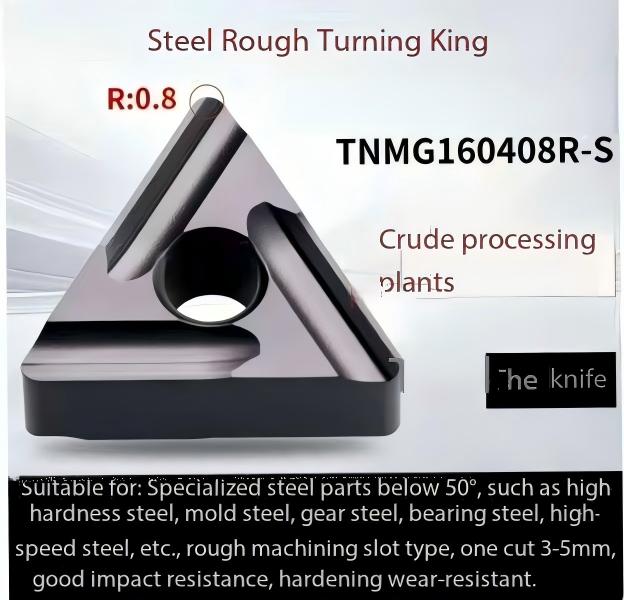
Discover the TNMG160408R-S turning insert. Designed for high-hardness steel, mold, and gear steel roughing. Check out our live machining video
H1: Product Overview – Redefining Heavy-Duty Steel Machining
The TNMG160408R-S is not just another standard insert; it is a specialized solution for aggressive material removal. Designed for the rough turning of steel, this triangular insert features a robust geometry that balances strength with cutting performance. Whether you are running high-volume production runs or tackling complex aerospace components, this insert provides the reliability needed to maintain tight tolerances and high throughput. Its design focuses on stability during interrupted cuts and high-feed operations, making it an indispensable asset for modern machine shops.
H2: Key Technical Specifications & Geometry Analysis
Understanding the technical parameters is crucial for selecting the right tool for your CNC lathe. Here is a breakdown of the critical specs for the TNMG160408R-S:
- Insert Shape (T): Trigon (Triangle). This shape offers three usable cutting edges, providing excellent economy and versatility for general-purpose turning.
- Clearance Angle (N): 0° clearance angle. This negative rake geometry significantly increases edge strength, making it ideal for heavy roughing and high-impact applications where positive inserts might chip.
- Tolerance (M): Class M tolerance ensures consistent dimensions for reliable seating in standard ISO holders.
- Chip Breaker/Fixation (G): Features a specialized chip breaker groove designed to control chips effectively during heavy cuts, preventing bird-nesting and ensuring safety.
- Size: 16mm inscribed circle diameter, 4.76mm thickness.
- Nose Radius (R): R0.8mm. This is a critical feature. An R0.8 nose radius offers the perfect compromise for roughing: it is strong enough to withstand the shock of intermittent cutting while still leaving a surface finish that reduces the workload for subsequent finishing passes.
- Hand of Cut (R): Right-hand cutting.
- Special Designation (-S): Indicates a specific substrate grade and chip former optimized for “Crude Processing” (Heavy Roughing).
H3: Advanced Coating Technology for Extended Tool Life
While the physical geometry handles the mechanical stress, the coating technology is what protects the carbide substrate from thermal and abrasive wear. Although the image does not specify the exact PVD/CVD layer structure, inserts in this class typically utilize advanced multi-layer coatings (such as TiAlN or Al₂O₃ based CVD). These coatings provide:
- High Heat Resistance: Essential for maintaining hardness at the high temperatures generated during rough turning of hardened steels.
- Oxidation Resistance: Prevents the diffusion of workpiece material into the insert, reducing crater wear.
- Low Friction: Helps in smoother chip evacuation, reducing built-up edge (BUE) formation.
This combination ensures that the TNMG160408R-S maintains its edge integrity even when pushing the limits of speed and feed rates.
H2: Application Scenarios – Where the “King” Reigns Supreme
The versatility of the TNMG160408R-S makes it suitable for a wide range of demanding industrial applications. It is specifically rated for specialized steel parts below 50 HRC.
H3: Target Materials
This insert excels in machining difficult-to-cut alloys that often cause premature failure in standard tools:
- High Hardness Steel: Capable of handling pre-hardened mold steels and tool steels up to 50 HRC without chipping.
- Mold Steel: Ideal for roughing out large mold bases where material removal rates (MRR) are prioritized.
- Gear Steel & Bearing Steel: Provides the stability needed for these dense, tough materials used in automotive and heavy machinery.
- High-Speed Steel (HSS): Effectively machines HSS components which are known for their work-hardening tendencies.
H3: Operational Parameters
For optimal performance, the TNMG160408R-S is designed for the following cutting conditions:
- Operation Type: Rough machining / Semi-roughing.
- Depth of Cut (ap): Recommended 3mm – 5mm. This deep cut capability allows for fewer passes to remove stock.
- Feed Rate (fn): Optimized for medium to high feed rates to maximize metal removal.
- Cutting Speed (vc): Adjustable based on material hardness, but generally supports higher speeds due to its thermal stability.
H2: Solving Industry Pain Points – Why Choose This Insert?
Machine shop managers face constant pressure to reduce cycle times and tooling costs. The TNMG160408R-S addresses several common pain points in steel machining:
- Chipping and Breakage: Standard inserts often fail catastrophically when encountering hard spots or scale on cast/forged steel. The 0° clearance angle and reinforced edge preparation of this insert provide superior impact resistance, drastically reducing unexpected downtime.
- Poor Chip Control: Long, stringy chips can damage the workpiece surface and pose safety hazards. The specialized “slot type” chip breaker ensures chips are broken into small, manageable “C” or “6” shapes, facilitating safe and automated production.
- Short Tool Life in Hard Materials: Machining bearing or gear steel usually eats through inserts quickly. The hardened wear-resistant nature of this insert extends tool life, meaning fewer tool changes and more uptime.
- Surface Finish Consistency: Even in roughing, a decent finish is required to protect the finishing tool. The R0.8 nose radius ensures a consistent surface texture, reducing the risk of vibration marks (chatter).
H2: Value Proposition for B2B Buyers
For procurement officers and production engineers, investing in the right cutting tools translates directly to the bottom line. Here is how the TNMG160408R-S delivers value:
- Increased Metal Removal Rate (MRR): By supporting depths of cut up to 5mm and high feeds, you can remove material faster, shortening cycle times per part.
- Reduced Cost Per Part: Longer tool life and fewer insert changes mean lower consumable costs and less labor time spent on setup.
- Process Reliability: Predictable tool life allows for better production planning and reduces the risk of scrapping expensive workpieces due to tool failure.
- Versatility: One insert grade can often handle multiple types of steel (from mild to hardened), simplifying inventory management and reducing the number of SKUs you need to stock.
🎥 Watch It in Action: TNMG160408R-S Live Demonstration
Seeing is believing. Check out our latest video demonstration where we put the TNMG160408R-S to the test on hardened bearing steel. Watch how it handles a 4mm depth of cut with smooth chip evacuation and minimal wear.[https://youtube.com/shorts/eJzYTFuw61c]
Video Title Suggestion: “Heavy Roughing Test: TNMG160408R-S vs. Bearing Steel | 50 HRC Challenge”
Conclusion
The TNMG160408R-S stands out as a premier choice for any machine shop serious about improving their steel roughing operations. By combining a robust negative geometry, an optimized R0.8 nose radius, and advanced wear-resistant properties, it solves the critical challenges of impact resistance and tool life. For B2B customers seeking a reliable, high-performance carbide insert for steel turning, this product offers a compelling balance of cost and efficiency. Upgrade your tooling arsenal today and experience the difference of the true “King of Steel Rough Turning

1 Comment
Maximize Your Margins: Why the TNMG160404-MA is the Best-Selling Insert for Stainless Steel Machining - JY Best Carbide
[…] TNMG160408R-S insert […]