In modern CNC machine shops, optimizing your manufacturing process with the TNMG 1604 PFA carbide turning insert is a proven way to achieve maximum machine uptime. With the rise of lights-out manufacturing and 24/7 automated production lines, CNC operators can no longer afford to baby their machines. Every unexpected stop to clear nested chips or replace a chipped insert eats directly into your profit margins.
When it comes to continuous steel turning, two major pain points consistently frustrate production managers: uncontrolled chip nesting (bird-nesting) and premature edge wear during high-speed finishing.
If you are looking to optimize your automated lines without paying the premium price tag of European brands, the TNMG 1604 PFA chipbreaker carbide insert is the heavy-duty, high-precision solution you have been searching for.
1. Product Features & Core Characteristics
To understand why this insert excels in high-demand environments, we must look at its foundational engineering. This is not just another standard carbide insert—it is a purpose-built component designed for long-lasting performance:
- Premium Grade Substrate: Utilizing an ultra-fine grain tungsten carbide substrate with an optimized cobalt-to-carbide ratio, providing high red-hardness and exceptional resistance to plastic deformation under high cutting temperatures.
- State-of-the-Art Multilayer Coating: Engineered with thick CVD (TiCN + Al2O3) or premium multi-layer PVD nano-coatings. This serves as a powerful thermal barrier, significantly reducing friction, delaying crater wear, and maximizing tool life in continuous cutting.
- The PFA Precision Chipbreaker: Specially designed for light-to-medium steel turning. The unique wave-shaped cutting edge and custom-angled land area reduce cutting forces by 15-20%, ensuring excellent chip-breaking capability even at shallow depths of cut.
- Flawless Consistency for CNC Automation: Predictable wear behavior ensures that thousands of parts can be machined continuously without critical dimensional variance, making it the perfect match for unattended (lights-out) manufacturing.
2. What is the PFA Chipbreaker Geometry?
The PFA chipbreaker is an advanced, proprietary geometry engineered specifically for the light-to-medium turning, semi-finishing, and high-speed finishing of carbon steels, alloy steels, and hardened steel parts.
Unlike generic economic geometries, the PFA features a highly optimized rake angle. This design achieves two critical goals simultaneously: It reduces cutting resistance to protect the spindle and workpiece, and it forces the flowing metal chip to bend and fracture into tight, manageable “C” shapes, even at minimal cutting depths (ap >= 0.5mm).
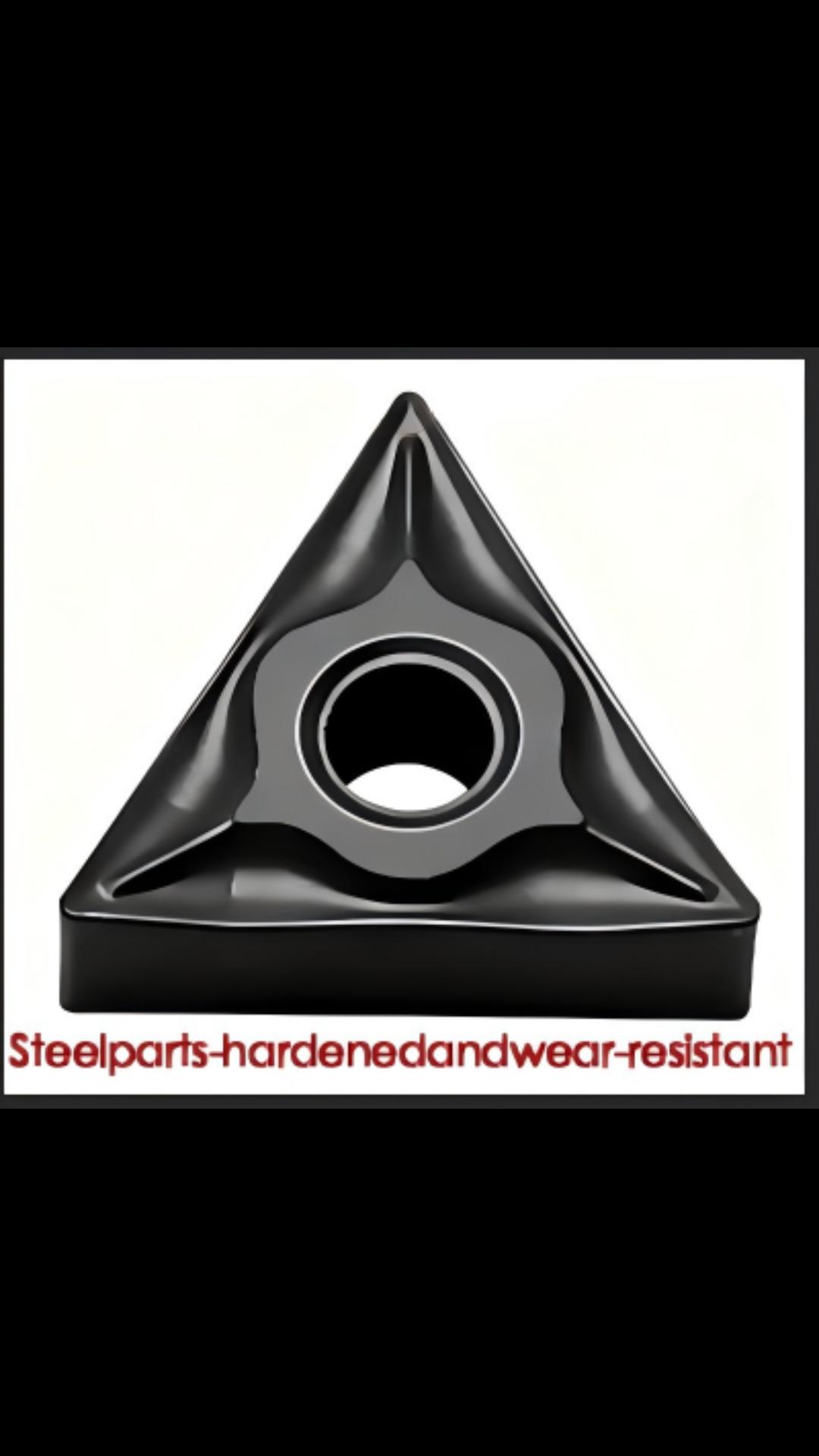
Figure 1: Premium TNMG 1604 PFA carbide turning insert engineered for hardened steel and continuous cutting.
3. Watch the PFA Chipbreaker in Action (Video Demonstration)
Nothing proves capability better than real-world machining data. Watch the video below to see how the PFA geometry effortlessly manages chip evacuation during automated high-speed steel turning, preventing the dreaded “bird-nesting” effect on the chuck and workpieces.
🎬 Video Demo: Continuous Steel Turning with TNMG 1604 PFA Inserts
Note: Watch the seamless chip breaking at high feed rates and observe the bright, flawless surface finish of the steel part.
4. TNMG 160404-PFA vs. TNMG 160408-PFA: Finishing vs. Semi-Finishing
To achieve the best cost-per-piece efficiency, choosing the correct corner radius is critical. The PFA geometry behaves exceptionally well across both 0.4mm and 0.8mm configurations.
- TNMG 160404-PFA (ANSI Standard: TNMG 331-PFA)
Primary Application: High-speed finishing, superior Ra surface roughness.
Recommended Cutting Depth (ap): 0.5 mm – 2.0 mm
Recommended Feed Rate (f): 0.10 – 0.25 mm/r - TNMG 160408-PFA (ANSI Standard: TNMG 332-PFA)
Primary Application: Medium turning, heavy stock removal with high edge security.
Recommended Cutting Depth (ap): 0.8 mm – 3.5 mm
Recommended Feed Rate (f): 0.15 – 0.35 mm/r
TNMG 160404-PFA (Finishing 04 Corner)
When running high-speed finishing cycles, the TNMG 160404-PFA delivers a flawless surface finish (Ra <= 1.6 um) that directly competes with top-tier European brands. It eliminates micro-vibrations and ensures that workpiece tolerances remain tight over long, continuous production runs.
TNMG 160408-PFA (Semi-Finishing 08 Corner)
For operations requiring medium depths of cut or managing minor variations in raw material stock, the TNMG 160408-PFA provides the perfect balance of edge toughness and chip control. It stands up to the thermal shocks of continuous dry or wet cutting seamlessly.
5. Cross-Brand Compatibility: Grade & Chipbreaker Comparison Chart
Many manufacturing facilities blindly stick to legacy European brands out of habit, absorbing inflated tooling costs. However, premium Chinese carbide manufacturing has fully closed the gap in performance.
If you currently use Sandvik (PF/PM), Kennametal (LF/MP), or Iscar (F3P/M3P) geometries in P15–P30 steel machining applications, switching to our PFA chipbreaker will maintain your cycle times and part quality while slashing your tooling expenditure by 30% to 50%.
- Our Premium Grade: YBG205 / YBM251 / Equivalent -> Equivalent Chipbreaker: PFA
- Sandvik Coromant: GC4325 / GC4425 -> Equivalent Chipbreaker: PF / PM
- Kennametal: KCP25B / KCU25 -> Equivalent Chipbreaker: LF / MP
- Iscar: IC8250 / IC8150 -> Equivalent Chipbreaker: F3P / M3P
- Walter: WPP20G / WPP30G -> Equivalent Chipbreaker: FP4 / MP4
- Seco Tools: TP2501 / TP3501 -> Equivalent Chipbreaker: FF2 / MF2
6. Benchmarking: Honest Pros & Cons Analysis
An honest shop manager respects transparency. Here is a balanced look at how our PFA geometry stacks up against traditional European tier-1 alternatives.
Advantages & Pros:
- Unbeatable Cost-per-Piece Efficiency: Delivers 95%–100% of the tool life of European brands at only 50%–60% of their market price, slashing your overall tooling overhead.
- Highly Predictable Wear Performance: Highly uniform flank wear behavior eliminates sudden, catastrophic breakages during continuous cutting, ensuring total process security.
- Elimination of Scratched Workpieces: The PFA design forces aggressive steel chips to snap quickly, protecting the machined surface and keeping the area around the tool holder clear.
Limitations & Cons:
- Not Designed for Heavy Interrupted Cuts: The PFA geometry is strictly optimized for continuous to light-interrupted cutting on steel. For heavy interrupted cuts (e.g., machining square/hex bars or pre-slotted shafts), a tougher roughing chipbreaker (such as a PM/PR geometry) must be substituted.
- Initial Brand Awareness: Unlike legacy manufacturers who have been around for a century, we are a rising premium Chinese brand. We rely on the raw technical performance of our initial test samples to prove our worth to conservative shop owners.
7. Frequently Asked Questions (FAQ)
Q1: Can the PFA chipbreaker replace my current Sandvik PF or Walter FP4 inserts directly?
A: Yes, absolutely. The PFA geometry is fully compatible with all standard ISO turning tool holders and directly maps to European “Finishing to Light-Medium” steel chipbreakers within the P15–P30 application range. You can implement these inserts into your existing CNC programs without changing tool paths.
Q2: Why is the PFA geometry highly recommended for automated/lights-out CNC machining?
A: In automated production, tool predictability is everything. Long, stringy steel chips scratch workpiece surfaces, ruin finish quality, and can wrap around the chuck or tool holder—causing catastrophic system failures and line stoppages. The PFA chipbreaker breaks chips reliably, ensuring they fall away safely into the chip conveyor without human intervention.
Q3: What specific steel materials perform best with the TNMG 1604 PFA inserts?
A: It excels in low-to-medium carbon steels (like AISI 1020, 1045), alloy steels (like 4140, 5140, 8620), and bearing steels. It also handles pre-hardened steel parts up to 45 HRC smoothly under stable, continuous turning conditions.
💡 Machining Strategy Tip: For heavy interruptions, switch from PFA to tougher grades to avoid chipping. Explore options for heavy, interrupted cutting in this JY Cutting Tools Guide.
Q4: How do I get free samples to test against my current European tooling?
A: We welcome performance head-to-head testing. Simply click our “Request Samples” button below, provide your current insert model, workpiece material, and current cutting parameters. Our engineering team will dispatch a customized test pack to your facility immediately.
Optimize Your Production Costs Today
Don’t let high tooling premiums or poor chip control hold your CNC automation back. The TNMG 160404-PFA and TNMG 160408-PFA offer the precise engineering required for modern, high-efficiency steel turning.
Ready to test the PFA geometry in your machine shop?
Click here to request free product samples, cross-reference your current tool grades, or receive custom cutting parameters optimized for your specific steel applications!

1 Comment
Cut CNC Tooling Costs: DCMT11T304 Optimization 47 characters
[…] 🙋 Frequently Asked Questions (FAQ) Q1: Is this Chinese-manufactured DCMT11T304-SL insert compatible with my current tooling setup? A: Absolutely. The code DCMT11T304 follows strict ISO and ANSI international standards. This means the 55-degree diamond profile, the thickness, the 7-degree relief angle, and the hole dimensions are universally identical. You can instantly install our inserts onto your existing boring bars and tool holders without making any mechanical adjustments or rewriting your CNC G-code programs. [1] Q2: Can this insert really handle tough, rough, and rusty steel workpieces? A: Yes, it is one of our product’s core strengths. Machining rusty steel usually accelerates tool wear due to the highly abrasive oxide layer. Our DCMT11T304-SL features a highly shock-resistant substrate combined with an upgraded coating matrix that maintains exceptional edge retention and stands up to scale without early chipping. [1] Q3: We are a wholesale distributor. Do you support factory-direct supply and custom pricing? A: Yes, we specifically partner with overseas wholesalers and tool distributors looking for stable supply and higher profit margins. Because we sell direct from our manufacturing facility in China, we eliminate expensive intermediate trading markups, allowing you to pass savings down to your clients while growing your business. [1] Q4: How can we request trial samples or get a commercial quotation? A: We want you to test the savings directly on your shop floor. You can easily reach our team through multiple direct B2B channels to request your Free Test Sample Pack or get a customized pricing quote: [1] Q5: Do you have equivalent options for negative-type inserts like TNMG if my production line requires high-speed automated finishing?A: Yes. If your workshop runs 24/7 on carbon/alloy steels, check out our flagship TNMG 1604 PFA Chipbreaker Insert […]